Cancer Patient Care at Home: A Family's Guide
Most of a cancer journey is spent at home, not in hospital. Skilled, compassionate cancer patient care at home eases suffering and protects dignity.
Key takeaways
- Pain management is the heart of good cancer patient care at home — and most cancer pain is controllable.
- Chemotherapy side effects like neutropenic fever are emergencies that need quick recognition.
- Nutrition, wound care, and emotional support are as important as medication.
The reality of cancer care at home
Between hospital visits and chemotherapy cycles, cancer patients spend most of their time at home — and that is where much of the suffering, and much of the relief, happens. Families often face unmanaged pain, frightening side effects, poor appetite, and emotional distress without training. Professional cancer patient care at home brings clinical skill and calm into that gap.
Managing cancer pain
Pain is the symptom families fear most — yet the great majority of cancer pain can be controlled with the right medication, given correctly and on time. This means following the prescribed schedule (not waiting for pain to return), managing breakthrough doses, and watching for side effects of strong painkillers. A trained nurse following established pain-management protocols makes the difference between a patient who suffers and one who is comfortable.
Chemotherapy side effects to watch
- Neutropenic fever: a fever after chemo can be life-threatening because the immune system is suppressed — it needs same-day medical attention.
- Nausea and vomiting: manage with prescribed anti-emetics and small, bland meals.
- Mouth sores, fatigue, and low blood counts: common and manageable with the right care.
- Dehydration: watch intake closely; IV fluids at home may be needed.
Nutrition, wounds, and daily care
Weight loss and poor appetite are common and dangerous in cancer — small, frequent, high-protein meals help, similar to our diet tips for bedridden patients. Surgical wounds, stomas, and ports need expert hygiene, and immobile patients need bed sore prevention. A daily routine keeps everything on track — see our daily home care checklist.
Emotional and family support
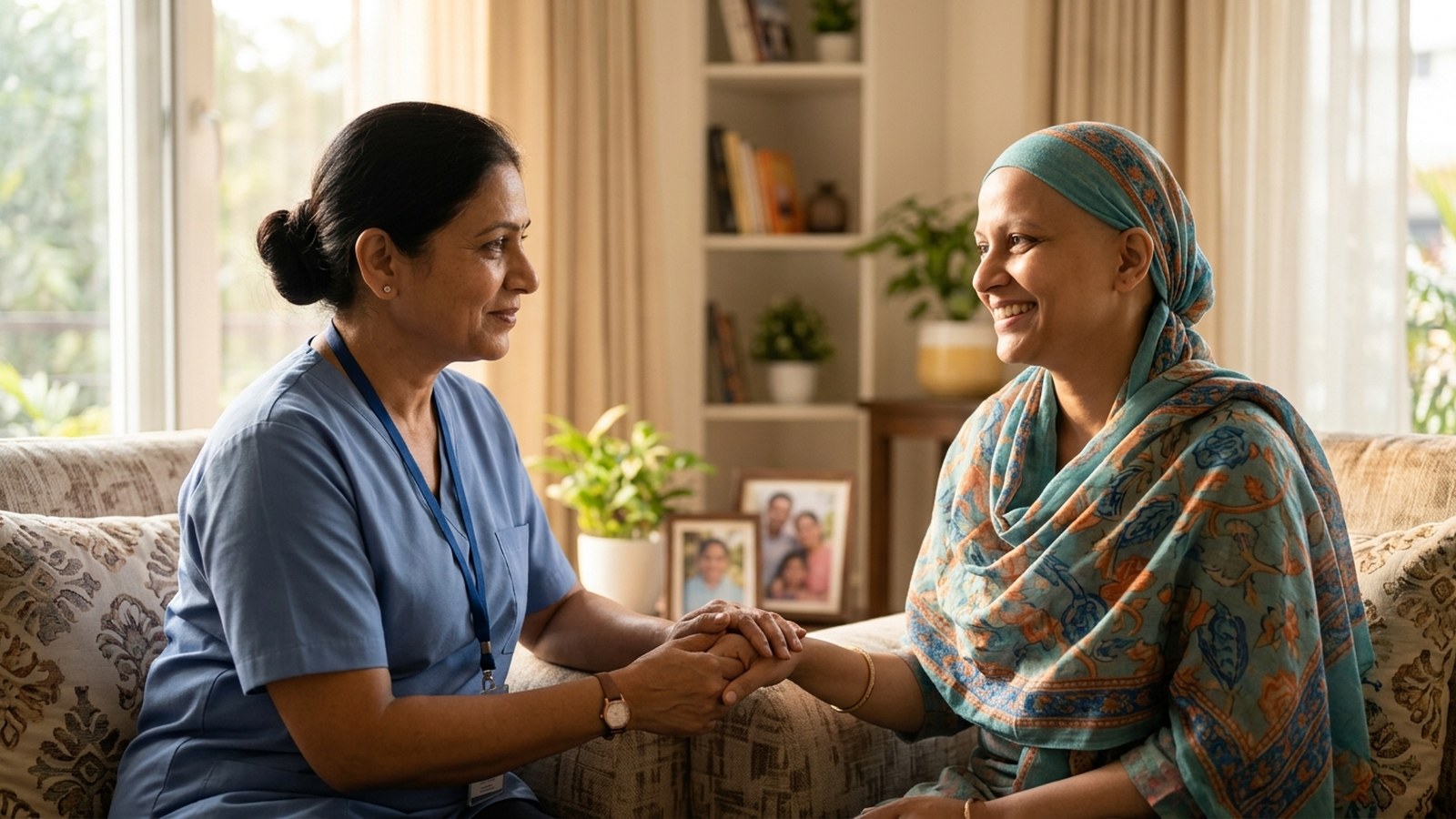
A cancer diagnosis carries fear, anxiety, and often depression — for the patient and the family. Presence, listening, and connecting with counselling or support resources matter as much as physical care. Families also need support; professional help prevents the burnout described in how home nursing reduces family stress.
How CareShield supports cancer patients at home
CareShield provides trained nurses for cancer care — pain and medication management, chemotherapy side-effect monitoring, wound and port care, nutrition support, and compassionate palliative care — coordinated with your oncologist. Book cancer home care for scheduled visits or 24/7 support, with daily updates to the family.