Why Home Care After Hospital Discharge Improves Recovery
Hospitals stabilise patients — recovery happens at home. Here is why structured post hospital care decides whether that recovery succeeds or sends your loved one back to the ward.
Key takeaways
- Up to two-thirds of preventable readmissions can be avoided with proper post hospital care at home.
- The biggest risks after discharge are medication errors, wound infections, and missed warning signs.
- A home nurse bridges the dangerous gap between the hospital and full recovery.
The most dangerous period is after you leave hospital
Families breathe a sigh of relief at discharge. But the discharge summary is not the finish line — it is the start of the recovery that actually determines the outcome. The first two to four weeks at home carry a high risk of complications: a wound that quietly gets infected, a new medicine taken incorrectly, or a subtle change in vitals that no one is watching for.
This is exactly the gap professional post hospital care is designed to close.
How home care speeds recovery and prevents readmission
- Medication accuracy. Post-discharge regimens are complex. A nurse organises and administers them correctly, avoiding dangerous double-doses or missed antibiotics.
- Expert wound and dressing care. Surgical wounds need sterile dressing and daily inspection to catch infection before it becomes sepsis.
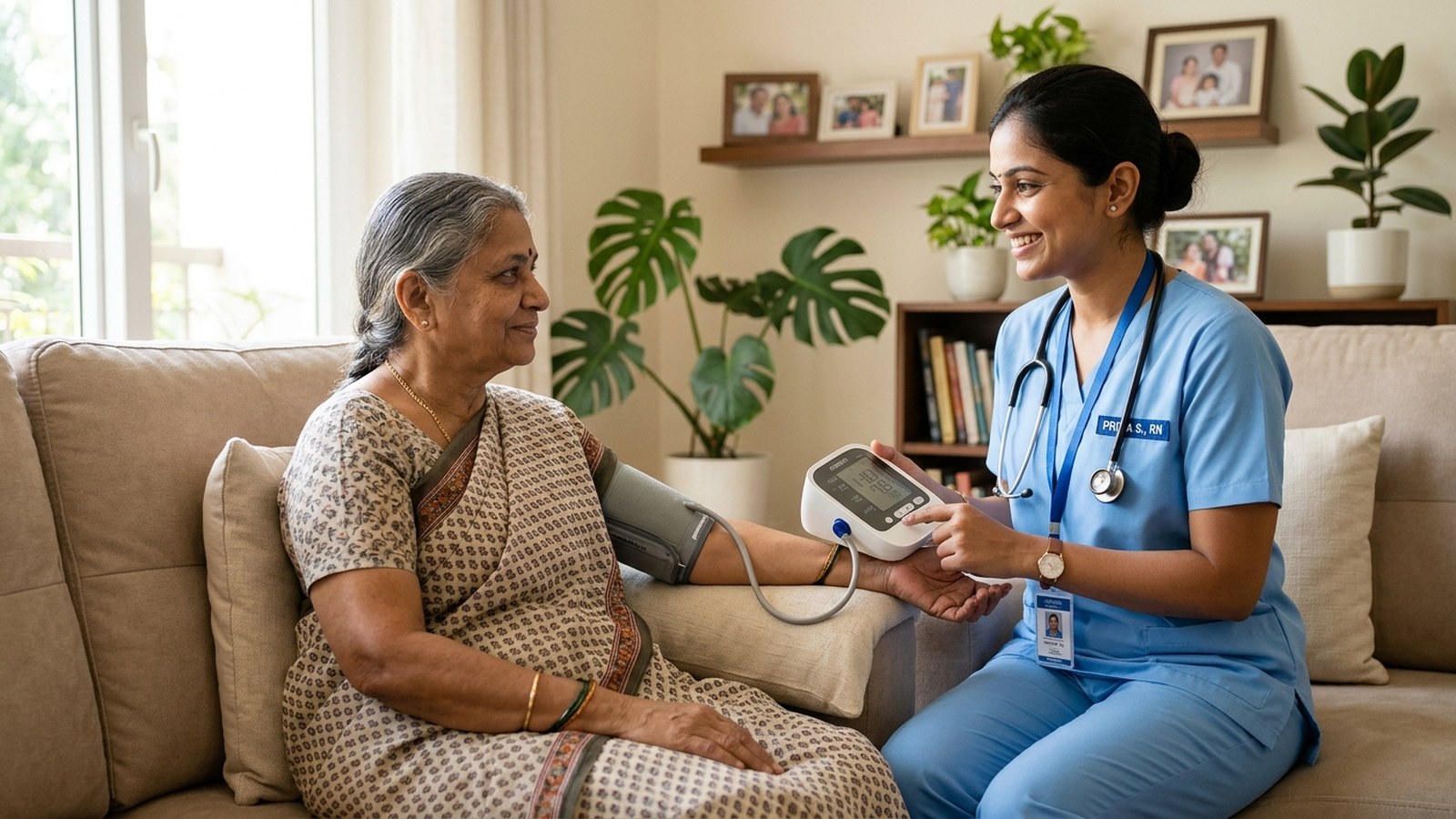
- Vitals monitoring. Blood pressure, temperature, oxygen, and blood sugar are tracked, so any deterioration is escalated to the doctor early.
- Mobility and physiotherapy support. Safe movement prevents clots, bed sores, and muscle loss while rebuilding strength.
- Faster, calmer recovery at home. Patients sleep better, eat better, and heal faster in familiar surroundings than in a noisy ward.
Who needs post-discharge care most?
Structured care at home is especially important after major surgery, ICU stays, a stroke, heart events, cancer treatment, or for elderly patients with multiple conditions. If the patient will be in bed for a while, read our guide on preventing bed sores and the common mistakes families make with bedridden patients.
Setting up care before discharge day
Do not wait until you are home and overwhelmed. Ask the hospital team for the discharge plan, the medication list, wound-care instructions, and follow-up dates. Then arrange a home nurse to be ready from day one. CareShield can usually assign a verified nurse within 2–4 hours, so the handover from hospital to home is seamless.
How CareShield supports post-hospital recovery
Our nurses coordinate with your treating doctor, follow the discharge plan precisely, log vitals at every visit, and send daily WhatsApp updates to the family. You can book post-hospital care for a few hours a day or round-the-clock, with a free replacement guarantee.