How to Care for Stroke Patients at Home
Recovery after a stroke is won at home, day by day. Here is how families can provide safe, effective stroke patient care — and when to bring in a nurse.
Key takeaways
- The first 3–6 months are critical for rehabilitation — consistent physiotherapy drives the best stroke patient care outcomes.
- Swallowing problems, falls, and missed blood-thinner doses are the biggest home risks.
- Preventing a second stroke means tight control of blood pressure, sugar, and medication.
Understanding stroke recovery
A stroke can affect movement, speech, swallowing, vision, memory, and mood — in any combination. Recovery is gradual and most rapid in the first three to six months, though improvement can continue for years. The family's role in stroke patient care is to keep the patient safe, support daily rehabilitation, and prevent a second stroke.
Mobility, positioning, and preventing falls
- Support the weak side during transfers; never pull on a weak arm.
- Reposition immobile patients every two hours to prevent bed sores.
- Clear walking paths, add grab bars, and remove loose rugs to prevent falls.
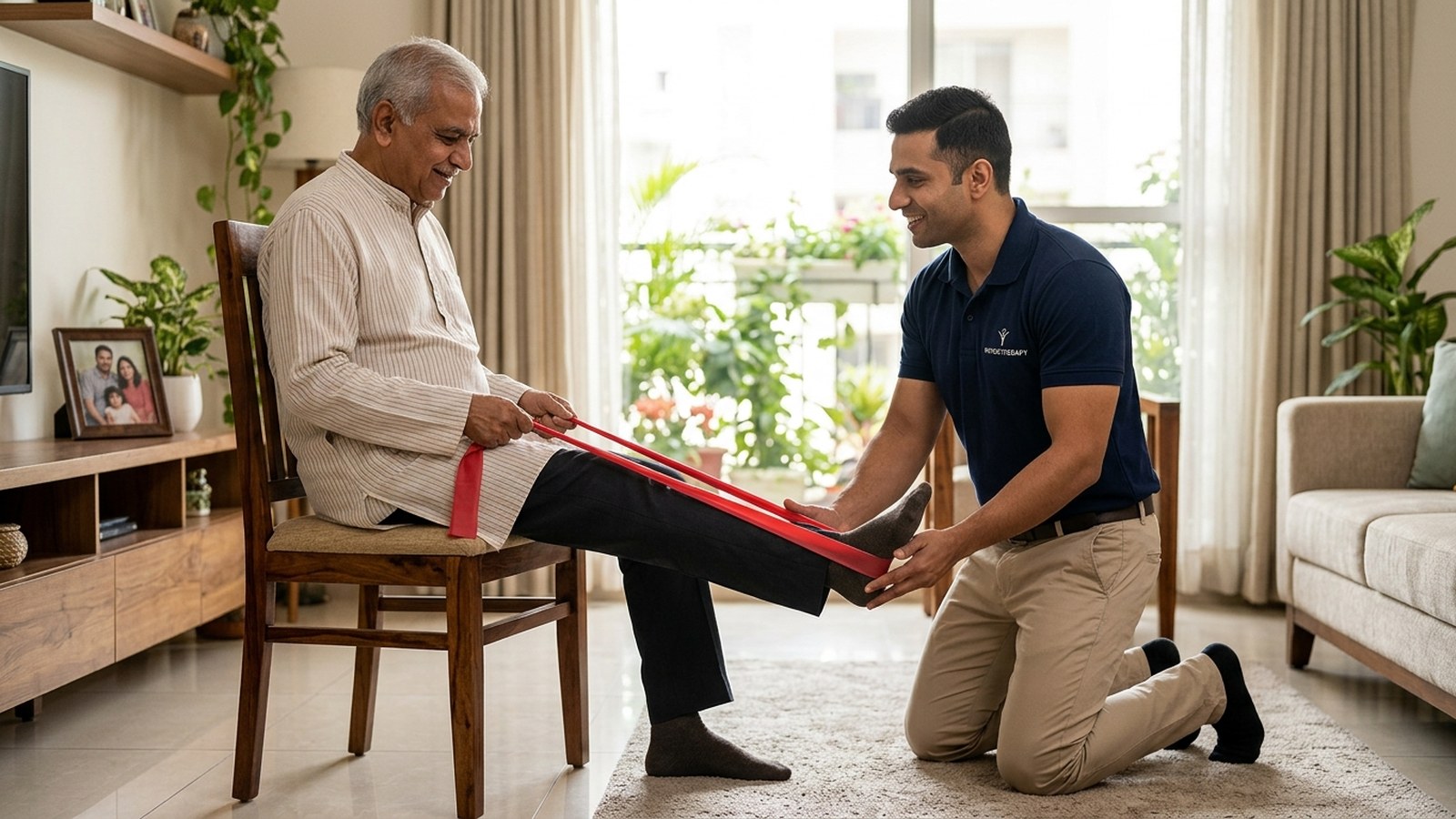
- Follow the physiotherapist's daily exercises — consistency matters more than intensity.
Swallowing and nutrition safety
Many stroke patients have dysphagia (difficulty swallowing), which risks choking and aspiration pneumonia — a leading cause of post-stroke complications. Feed the patient sitting upright, use the texture the doctor advises (often soft or thickened), go slowly, and keep them upright for 30 minutes after meals. If a feeding tube is in place, it needs trained nursing care.
Medication and preventing a second stroke
Stroke survivors are at high risk of another stroke. This is where discipline saves lives:
- Give blood thinners and blood-pressure medicines exactly as prescribed — never skip.
- Monitor blood pressure and, for diabetics, blood sugar (see our diabetes home care guide).
- Support a low-salt, heart-healthy diet and no smoking.
- Know the FAST warning signs (Face drooping, Arm weakness, Speech difficulty, Time to call for help) and act immediately.
Speech, mood, and emotional support
Communication difficulty and post-stroke depression are common and under-recognised. Be patient, give time to respond, celebrate small wins, and watch for withdrawal or low mood — it is treatable and worth raising with the doctor.
When a home nurse makes the difference
If the patient has a feeding tube, catheter, swallowing difficulty, limited mobility, or needs injections and close monitoring, a trained home nurse keeps recovery on track and prevents complications. CareShield can also coordinate physiotherapy at home. Book stroke home care and we will build a plan around the patient's deficits.