What to Do When an Elderly Parent Cannot Live Alone
Realising a parent can no longer manage alone is one of the hardest moments for any family. Here are your options — and why elderly care at home is often the best.
Key takeaways
- Start with an honest safety assessment: medication, mobility, meals, hygiene, and memory.
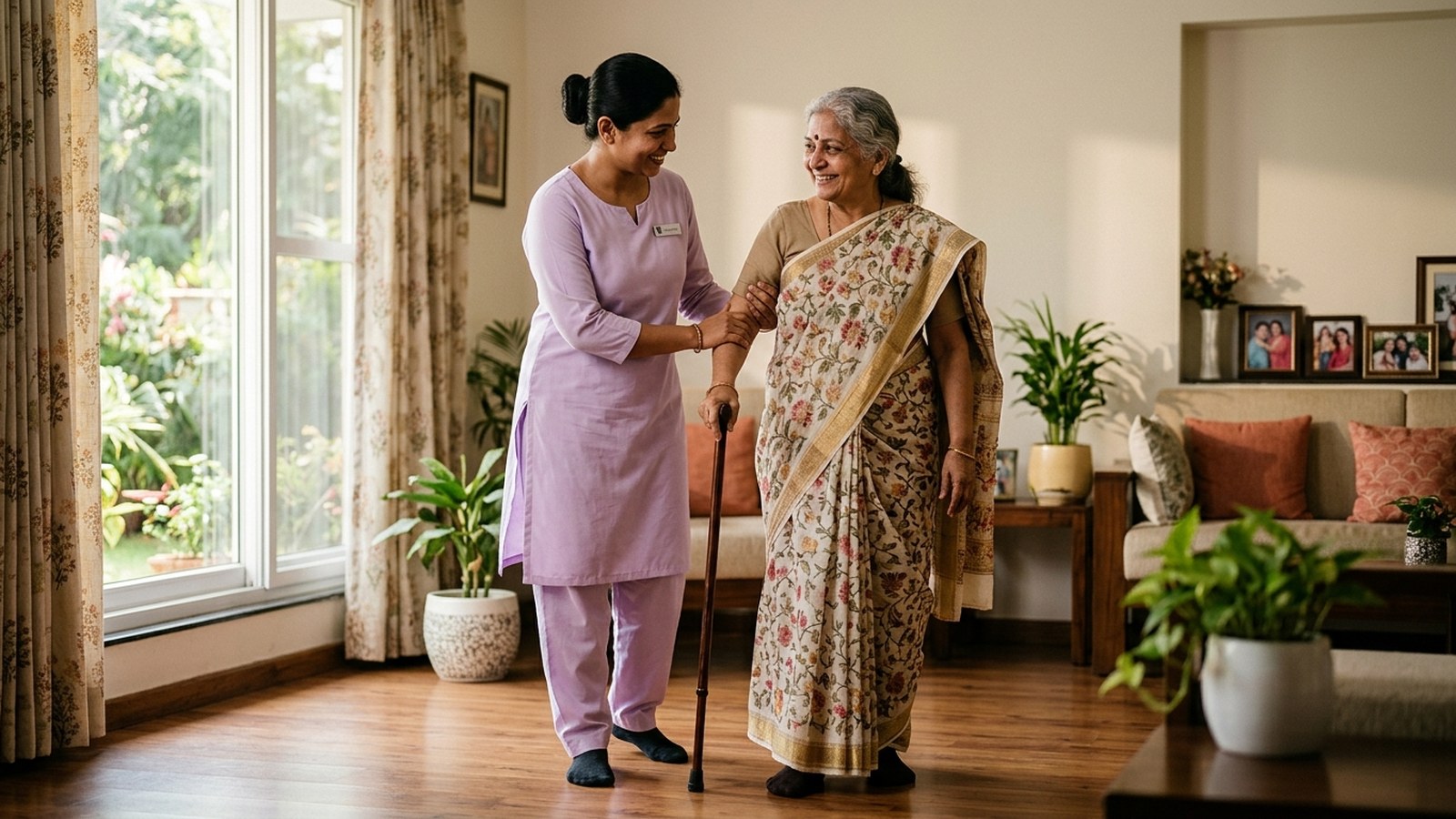
- Elderly care at home lets a parent stay in familiar surroundings with one-to-one support.
- A live-in or daytime caregiver is usually safer and more affordable than people assume.
First, assess what 'cannot live alone' really means
Before deciding anything, get clear on the specific risks. Can your parent manage medication, cooking, bathing, and moving around safely? Are there falls, memory lapses, or a chronic condition that needs monitoring? Pinpointing the gaps — rather than reacting to fear — helps you choose the right level of support. Our guide on the signs a parent needs home care is a good starting checklist.
Your main options
- Elderly care at home (daytime or live-in caregiver). The parent stays in their own home with professional help for daily living, medication, and safety.
- Moving in with family. Emotionally appealing but demanding; usually works best combined with a caregiver during work hours.
- Assisted living or a nursing home. Suitable for very high-dependency cases, but costlier, less personal, and often resisted by parents.
Why home care is usually the best first choice
Older adults overwhelmingly want to stay in their own homes. Familiar surroundings reduce confusion (especially in dementia), preserve dignity and routine, and keep the family closely involved. A trained home caregiver or nurse can provide everything from companionship to skilled medical care — scaling up as needs change — without the upheaval of relocation.
Making the home safe
- Install grab bars in the bathroom and remove loose rugs and clutter.
- Improve lighting, especially on stairs and at night.
- Keep emergency numbers and medication lists visible.
- Set up medicine reminders and, if needed, a fall-alert device.
Having the conversation with your parent
Lead with respect and listen to their fears — most resistance is about losing independence, not about the help itself. Frame a caregiver as support that lets them stay at home, not a step towards losing control. Letting them meet and approve the caregiver builds trust quickly.
CareShield offers flexible elderly care at home — from a few hours to 24/7 live-in — with verified caregivers, daily updates, and a free replacement guarantee.