Signs Your Elderly Parent Needs Home Care Support
Most families wait too long. Here are the early warning signs that your parent needs elder care at home — and what to do about each one.
Key takeaways
- Sudden weight loss, unopened medicine strips, and a cluttered or unclean home are the earliest red flags.
- Frequent falls, missed medication, and withdrawal from social life signal it is time for elder care at home.
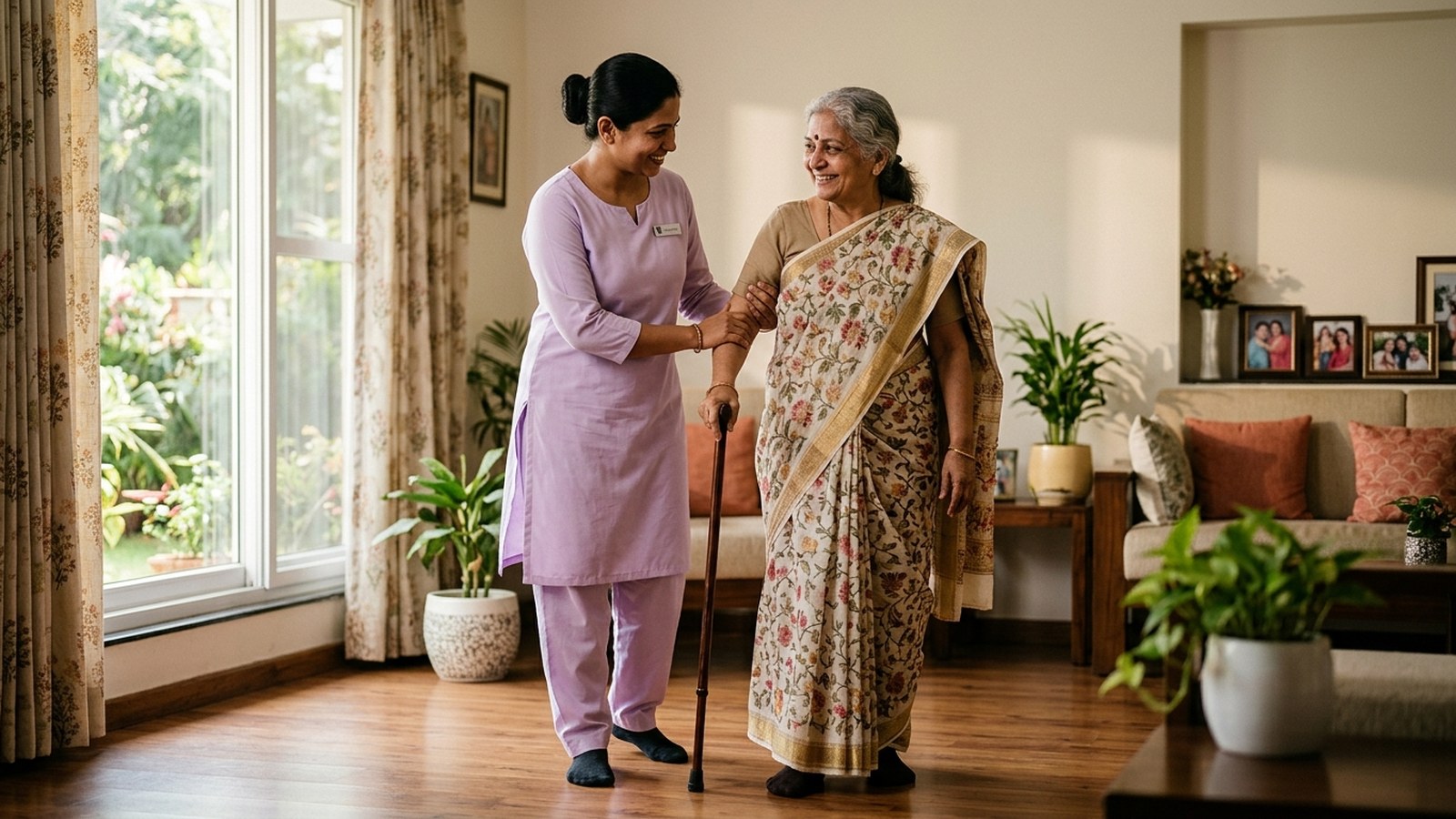
- You do not need to move a parent into a facility — a trained home caregiver can keep them safe in familiar surroundings.
Why early signs are easy to miss
Ageing rarely arrives with an announcement. It shows up quietly — a parent who skips a meal, forgets a tablet, or stops answering the phone. Because the changes are gradual, families often normalise them until a fall or a hospital admission forces the issue. Recognising the signs early lets you arrange elder care at home on your terms, not in a crisis.
The good news: most warning signs are visible if you know what to look for during a normal visit. Below are the ten that matter most.
10 signs your elderly parent needs home care
- Unexplained weight loss. Loose clothing or an empty fridge often means cooking and eating have become too hard.
- Missed or muddled medication. Full strips on the wrong day, or doubled doses, are dangerous and common.
- Recent falls or unsteadiness. Bruises they cannot explain, or holding onto furniture to walk.
- A decline in personal hygiene. Unwashed hair, body odour, or wearing the same clothes for days.
- An unclean or unsafe home. Piled-up dishes, spoiled food, or unpaid bills suggest daily tasks are slipping.
- Forgetfulness that affects safety. Leaving the gas on, getting lost on familiar routes, or repeating questions.
- Social withdrawal. Skipping temple, calls, or family events they once enjoyed.
- Difficulty managing chronic conditions. Uncontrolled blood sugar or blood pressure between doctor visits.
- Mood changes. New irritability, anxiety, or signs of depression and loneliness.
- Caregiver burnout in the family. When you or a sibling is exhausted, that is itself a sign professional help is overdue.
Signs that mean you should act immediately
Some signs are not 'wait and watch'. Call a doctor or arrange a nurse the same day if your parent has had a fall with injury, sudden confusion, chest pain, breathlessness, a wound that is not healing, or has stopped eating and drinking. A home nurse visit can assess vitals and flag anything that needs hospital attention before it escalates.
What kind of home care does your parent actually need?
Not every parent needs the same level of support. Matching the need to the right care keeps costs reasonable and dignity intact:
- Companionship and daily assistance — help with bathing, meals, mobility, and errands.
- Skilled nursing — injections, wound dressing, catheter care, and vitals monitoring by a qualified nurse at home.
- Specialised care — for dementia, stroke recovery, or diabetes management.
If you are juggling a job alongside this, our guide on caring for elderly parents while working full time covers how to set up reliable cover.
How CareShield helps
CareShield matches families across Delhi NCR with background-verified, trained caregivers and nurses — from a few hours a day to 24/7 live-in support. You meet the caregiver before care begins, receive daily WhatsApp updates, and get a free replacement within 24 hours if you are not satisfied. Start by telling us about your parent and we will recommend the right plan.